Why Arsenal Are Called
The Gunners.
The name is an actual arsenal, the badge is a real cannon, and the nickname wrote itself the moment workers at a Victorian munitions factory decided to form a football club. The story starts on the south bank of the Thames — and it gets more complicated from there.
Arsenal are one of the few clubs in English football whose nickname requires almost no explanation. They come from an arsenal. They have a cannon on their badge. They are called the Gunners. The logic is right there on the surface, and most people leave it at that.
Which is a shame, because the actual story — where the club came from, how they got the cannon, and how they ended up in north London playing next door to a club that has never forgiven them for it — is considerably more interesting than the obvious answer suggests.
Dial Square: The Name That Lasted One Match
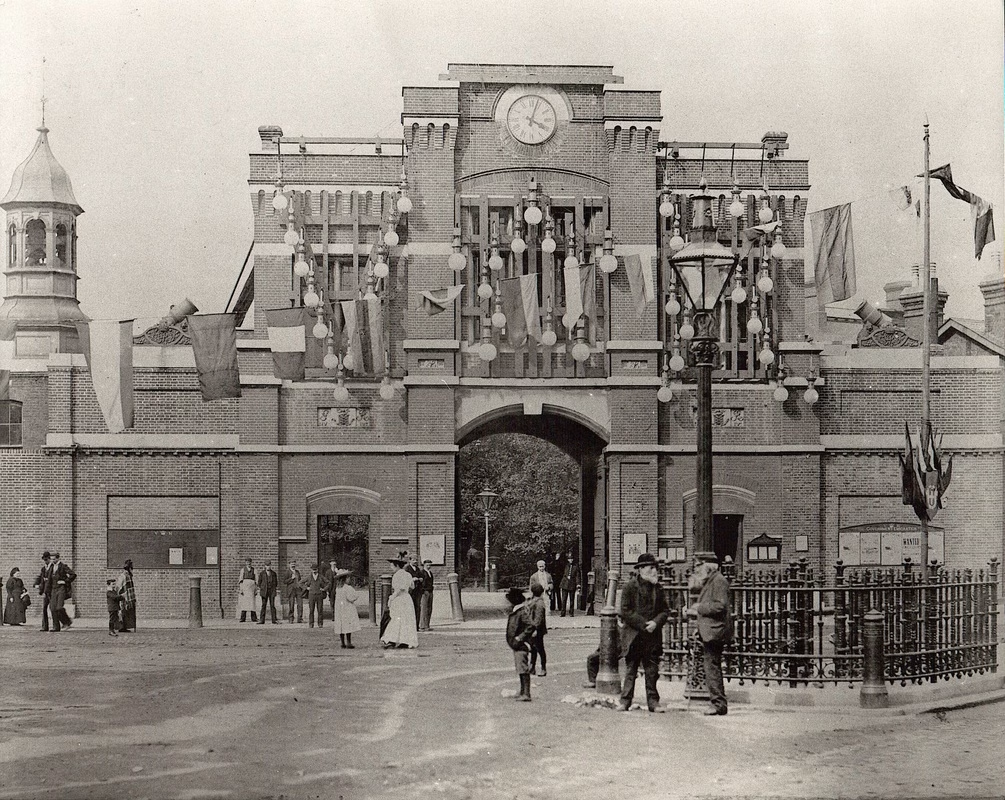
The club was founded in 1886 by workers at the Royal Arsenal in Woolwich — at that time, a vast complex of munitions factories, armament stores, and military workshops on the south bank of the Thames in south-east London.
It was one of the largest employers in the country, with around 80,000 workers during war time, and the men who worked there were typical of the kind of people who formed football clubs in Victorian England: namely, skilled workers with enough money and free time to want something to do on a Saturday.
The founders named their new club Dial Square, after one of the workshops in the complex where several of them were employed. It was a perfectly reasonable name for an internal works team. It was also, by any measure, a terrible name for a football club.
It lasted exactly one match. On Christmas Day 1886, Dial Square beat Eastern Wanderers 6-0 on a pitch in Plumstead. Afterwards, the players gathered at a pub called the Royal Oak and collectively decided their club needed a better name. They settled on Royal Arsenal FC — after the establishment that employed them all — and that was that.
The Cannon: A Badge from a Coat of Arms
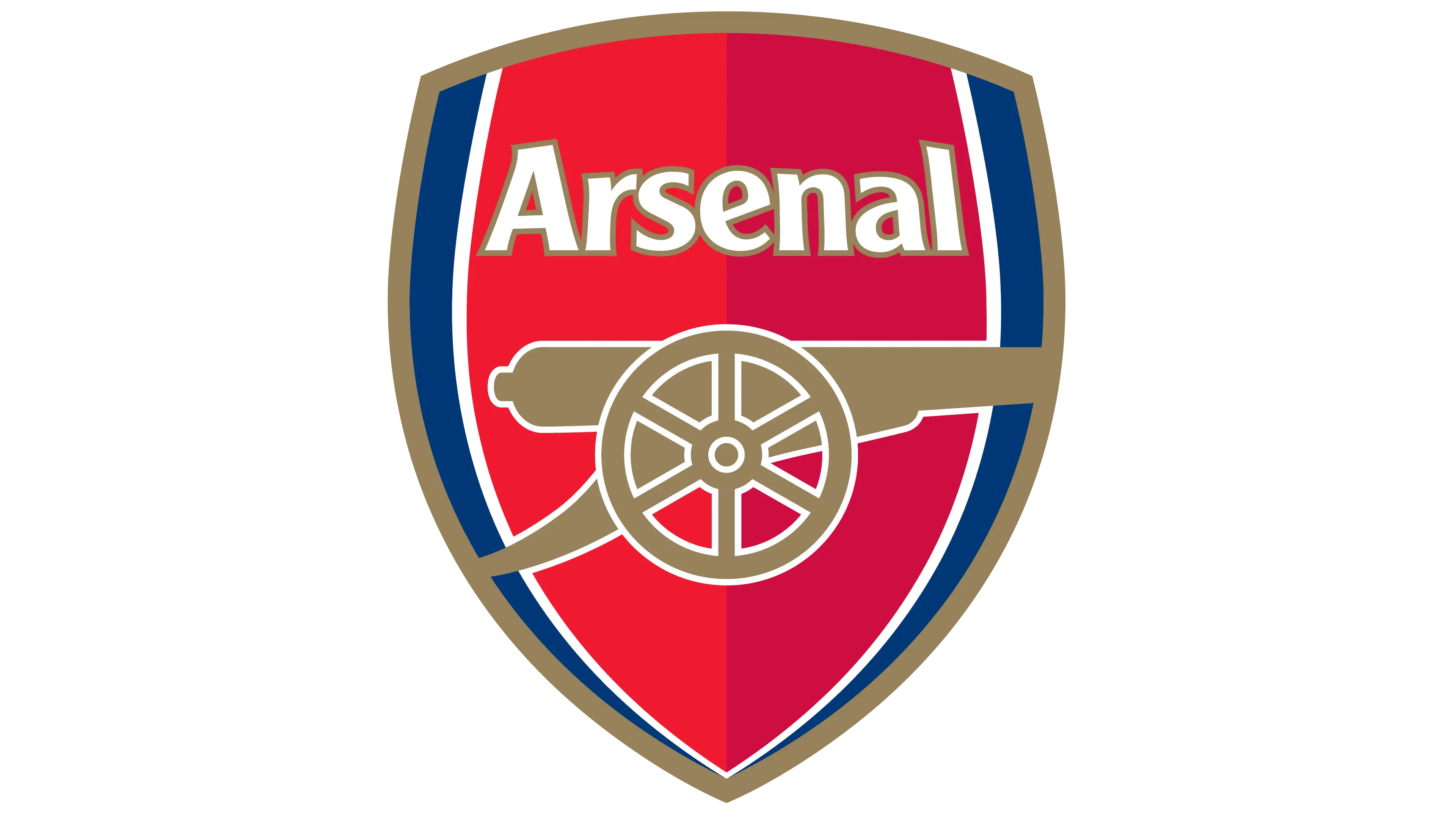
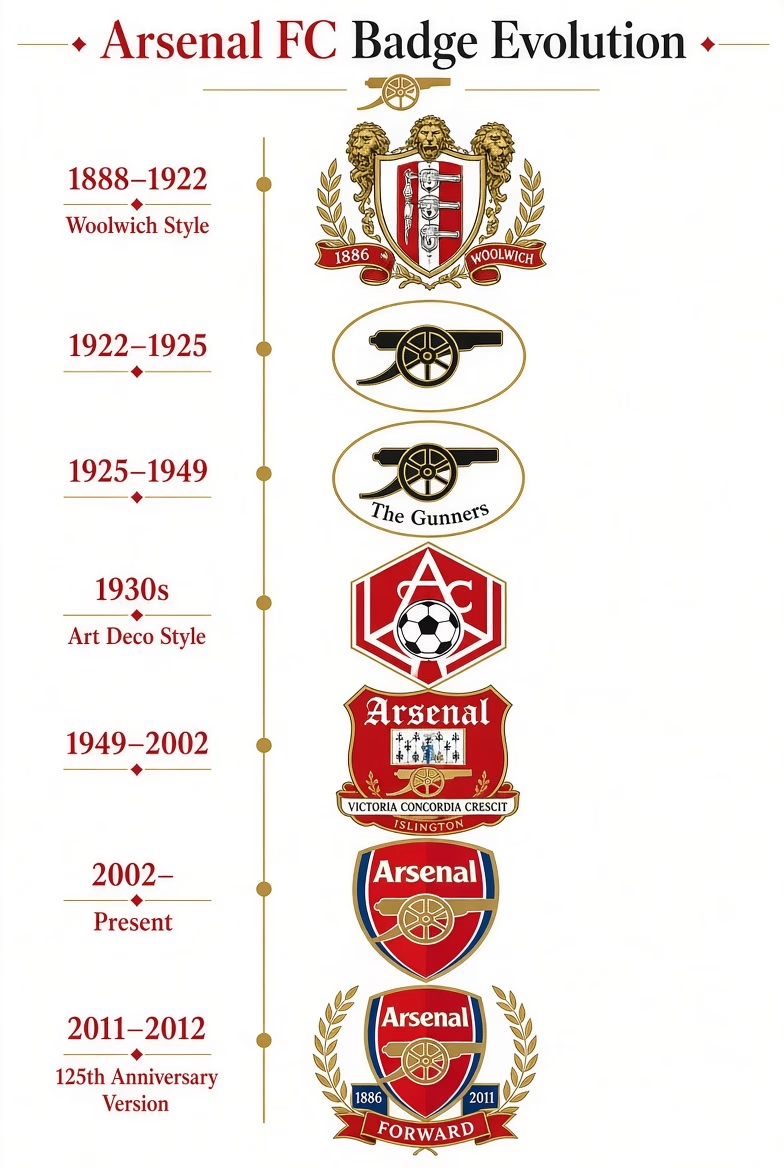
The cannon on Arsenal’s badge was not invented by the club. It came directly from the coat of arms of the Royal Arsenal itself, which had featured artillery pieces as symbols of the establishment’s purpose for generations before any football was played there.
When Royal Arsenal FC adopted it, the cannon pointed to the right. At some point in the twentieth century, it was reversed — you’ll notice that the modern Arsenal cannon points left.
The club has never provided a fully satisfying official explanation for why, and various theories have been offered over the years: that it was changed for aesthetic reasons, that a new badge designer simply flipped it, that there is a heraldic significance that has been lost. None of them is definitive. The cannon changed direction, and Arsenal have been quietly carrying that small mystery ever since.
We are proud of our origin — proud that this club was not founded by publicans or brewers but by working men who wanted a game of football.
A Royal Arsenal FC founding member, on the club’s early identity
By 1891 they had become Woolwich Arsenal, the first professional club south of the Thames, and were elected to the Football League in 1893. They were doing well enough on the pitch. Off it, though, they had a problem that would eventually force a decision that changed English football’s geography permanently.
The Move That Tottenham Have Never Forgiven
By the early 1900s, Woolwich Arsenal were in serious financial trouble. The Royal Arsenal was changing, the local population was shifting, and the club’s support base was thin.
In 1910 a businessman called Henry Norris took over — a property developer, former Fulham chairman, and future MP who had the kind of connections and determination that tends to reshape institutions around him.
Norris’s solution to Arsenal’s problems was to move them. Not across town, but across the river — from south-east London to north London, to a new ground in Highbury, Islington. In 1913, Arsenal left Woolwich and arrived in territory that Tottenham Hotspur considered their own.
Spurs were furious. They had been established in the area since the 1880s, and the arrival of a rival club a few miles down the road was not warmly received. The fury, it turned out, was only the beginning.
When the Football League resumed after the First World War in 1919, a vote was held to decide which clubs would make up Division One.
Arsenal had finished fifth in Division Two in the final pre-war season of 1914-15 — not good enough on any obvious merit-based calculation to be promoted. Tottenham, who had finished one place above the relegation zone in Division One that same season, expected to return to the top flight as a matter of course.
They did not, and to make matters worse, Arsenal were voted into Division One instead, leapfrogging not just Tottenham but several clubs with a stronger statistical case.
How this happened has never been completely explained. Henry Norris was a persuasive man who reportedly gave a persuasive speech to the Football League committee.
The official reasoning pointed vaguely to Arsenal’s longer Football League membership. Whatever the true reason, Arsenal have been in the top division ever since — a run that now spans more than a century — while Tottenham went down and have carried the grievance about it ever since.
It is, of course, highly unlikely that modern-day Spurs fans are aware of this, even though Arsenal are still seen as their arch rivals
Arsenal were founded in 1886 as Dial Square FC by workers at the Royal Arsenal, Woolwich — the name lasted one match before they renamed themselves Royal Arsenal FC.
They became the first professional football club south of the Thames in 1891, and were elected to the Football League in 1893.
The club moved from Woolwich to Highbury in 1913, crossing the river and arriving on Tottenham’s doorstep — a relocation still talked about in north London 113 years later.
In 1919 they were controversially voted into Division One despite finishing fifth in Division Two pre-war. They have not been relegated from the top flight since.
The cannon on the badge derives from the Royal Arsenal’s own coat of arms. The original pointed right; at some point in the twentieth century it was reversed, and nobody has ever fully explained why.
Arsenal dropped the word “Woolwich” from their name in 1914, a year after the move north — cutting the last formal tie to the factory that founded them.
The Gunners: A Nickname That Never Needed Inventing
The Gunners nickname emerged naturally from the club’s origins and has been in settled use since the early years of the twentieth century. You start a football club at an armaments factory, you put a cannon on your badge, and eventually someone calls you the Gunners — and it sticks, because what else would you call them.
Arsenal dropped “Woolwich” from their name in 1914, cutting the last formal tie to the factory in south-east London that had created them. The cannon stayed. The Gunners stayed.
The men who worked at the Royal Arsenal are long gone, and the munitions complex in Woolwich has been converted into flats and galleries and a Crossrail station.
The club they founded plays its football five miles north in a modern stadium in the London Borough of Islington, which is about as far from a Victorian arms factory as it is possible to get.
Nobody is standing in the Emirates now thinking about rivet hammers and gunpowder. The Gunners are just the Gunners — it’s what you call them, what the shirt says, what the chant assumes.
The fact that it traces back to a munitions factory on the other side of the river, and that the club’s arrival in north London so comprehensively annoyed their neighbours, is forgotten now, but a hundred years later, the 2 clubs still despise each other — now that’s the kind of detail that repays a second look.
Previously: Why Tottenham are called Spurs — Harry Hotspur, a 125-year-old pun, and the medieval knight north London adopted as its own.
Next: Coming soon.

John Herman is a Leeds-based, would-be football writer and founder of Football Nonsense. Blending fan passion with sharp opinion, attempting to tackle the game’s biggest debates, from the terraces to the boardroom, with honesty, (attempted) humour, and heart.